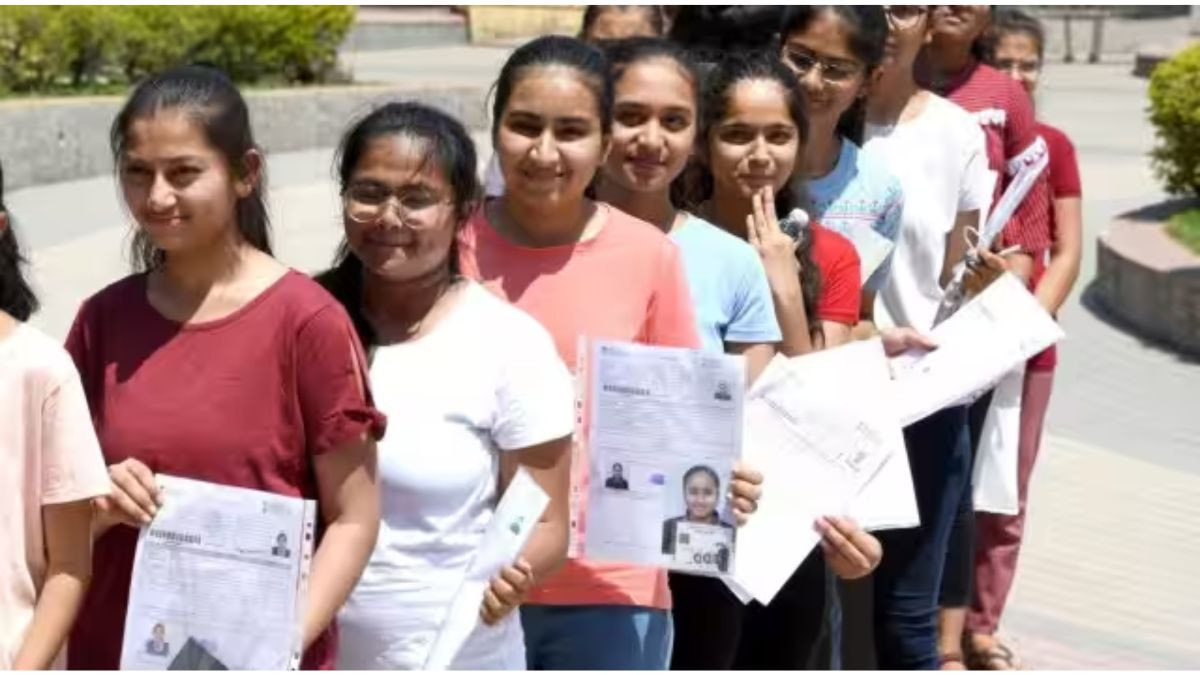
JEE Main 2025 - NTA to start conducting the JEE Main Session 2 paper from April 2, 2025, to April 9, 2025. The registration has been concluded for the Session 2 exam and based on applications received, NTA has released the JEE Main City Intimation Slip and admit card for registered applicants. Students will be able to download the JEE Main admit card using their login credentials from the official website.
JEE Main City Slip 2025 (Download)
NTA will release the JEE Main admit card 2025 for the April session at least 3 days before the scheduled examination date. The hall ticket can be downloaded by candidates using JEE Main Login 2025 at jeemain.nta.nic.in. Candidates can access it using their registration number and password. Before NTA releases the hall ticket, the city intimation slip is also released for registered aspirants. The JEE Main city slip provides details to applicants regarding the city, exam date, and centre allotted to them.
After each shift of JEE Main session 2 exam is concluded, the JEE Main paper analysis will be provided to students. In this page, candidates will be able to find JEE Main unofficial answer key 2025 as well released by subject experts and teachers. Based on the paper analysis and unofficial answer key, candidates have the option to predict their rank through JEE Main Rank Predictor Tool.
Predict your JEE Main 2025 Rank here
The National Testing Agency (NTA) conducts the JEE Main exam in two sessions (January and April) for students who wish to secure admission to B.Tech and B.Arch/B.Plan programs in prestigious engineering colleges such as IITs, NITs, and IIITs.
NTA started the JEE Main Session 2 registration form on February 1, 2025. Eligible candidates can apply for the JEE Mains exam till February 25, 2025. As per the official notice, JEE Main session 2 exam date is April 1, 2025 to April 8, 2025. JEE Main Analysis 2025 is provided after each shift of the exam is successfully conducted. Students now can check the JEE Main expected cutoff and can download the JEE Main question papers and solutions for all shifts of the JEE Main Session 2.
JEE Main Session 2 exam date is April 2, 2025, to April 9, 2025. The detailed schedule for the JEE Main 2025 exam will be released by NTA on its official website. If a student appears for both sessions, then one in which marks are higher will be considered for qualification. Only those who qualify the JEE Main cutoff are eligible for the JEE Advanced exam 2025.
Also Read:
The JEE Main result 2025 is announced separately after each session; however, the cut off is released once the session 2 exam is concluded. Following the announcement of the result, the JEE Main counselling starts on the official website of JoSAA (Joint Seat Allocation Authority).
Candidates who wish to appear for the JEE Main exam next year must be aware of the syllabus and exam pattern. It is expected that NTA will bring no change in the syllabus and pattern; however, things will be more clear once the information bulletin is out. JEE Main 2025 exam date will be announced later by NTA.
JEE Main 2025: Latest Updates
- JEE Main Session 2 City Intimation Slip to be released by March 20-22, 2025 (tentative).
- JEE Main B.Arch Provisional Answer Key 2025 has been released at jeemain.nta.nic.in.
- JEE Main Result 2025 announced on February 11, 2025. JEE Main scorecard is available to download at jeemain.nta.nic.in.
- JEE Main Answer Key 2025 released on February 4, 2025.
- JEE Main Session 2 Application Form 2025 Out on the official NTA website. The last date to apply for JEE Main 2025 is February 25.
- JEE Main Session 1 Admit Card Out for exams to be held on January 28, 29, and 30, 2025.
- JEE Main Admit Card 2025 Out for exams scheduled on January 22, 23, and 24, 2025.
- JEE Main Exam Dates 2025 for Paper 1 and Paper 2 have been released by NTA. The Paper 1 exam will be conducted on January 22, 23, 24, 28, and 29, 2025. The Paper 2 exam will be held in single shift on January 30, 2025.
- JEE Main City Intimation Slip to be released soon by the National Testing Agency. It is expected that the city slip will be released likely by January 12, 2025 (at least 10 days before the scheduled examination date).
- NTA has released the JEE Main notification 2025 at jeemain.nta.nic.in
- JEE Main exam date is January 22, 2025 to January 30, 2025 for Session 1. The Session 2 of JEE Main exam will be conducted from April 2, 2025 to April 9, 2025
- NTA has revised the JEE Main exam pattern 2025. The official notice released at nta.ac.in.
- JEE Main Notification 2025 will be released likely in November 2024.
- As per the past trends, JEE Main registration for Session 1 will start on November 1, 2024 (tentative).
- JEE Main exam date 2025 for both January and April phases is yet to be announced by NTA.
- With the release of the notification, JEE Main registration 2025 will also start at jeemain.nta.ac.in.
JEE Main 2025 - Apply for Engineering Colleges
Candidates who wish to take admission to the B.Tech program can apply to these engineering colleges from the link given below:
JEE Main Exam Date 2025 - Schedule and Timings
The National Testing Agency (NTA) has announced the JEE Main 2025 exam dates on the official website. JEE Main Session 2 exam dates are given in the table below.
|
Exam Date
|
Paper
|
Shift
|
|
April 2, 3, 4, 7, 2025
April 8, 2025
|
Paper 1
Paper 1
|
Both Shifts
Single Shift (3 PM to 6 PM)
|
|
April 9, 2025
|
Paper 2
|
First Shift (9 AM to 12 PM)
|
As per the JEE Main notification, candidates who have successfully completed their Class 12th or its equivalent, or those who are currently in the process of appearing for the examinations, are eligible to apply for JEE Main 2025, provided that they have studied Physics, Chemistry, and Mathematics as mandatory subjects.
For JEE Main 2025, it is important to note that the 75% eligibility criteria have been reintroduced. As per this requirement, General/OBC candidates must obtain a minimum of 75% marks in their Class 12th or equivalent examinations, while SC/ST candidates need to secure a minimum of 65% marks in the same. Meeting these eligibility criteria is crucial for candidates aspiring to secure admissions in NITs, IIITs, and GFTIs.
Read More: JEE Main Eligibility Criteria 2025
JEE Main 2025 consists of three papers: Paper 1 for admission to BE/BTech courses, Paper 2A for admission to BArch courses, and Paper 2B for admission to BPlan courses. There will be multiple-choice (MCQ) and Numerical value answer-type questions as per the JEE main exam pattern 2025. In comparison to Paper 2A and 2B, which have 82 and 105 questions, respectively, Paper 1 will have a total of 90 questions.
JEE Main 2025 Exam: Highlights
A detailed description of the highlights of the JEE Main 2025 examination can be found here. Candidates can check the relevant table below:
|
Particulars
|
Details
|
|
Name of the Exam
|
JEE Main
|
|
Conducting Body
|
National Testing Agency (NTA)
|
|
JEE Main official Website
|
jeemain.nta.nic.in
|
|
Level of Exam
|
Undergraduate Exam
|
|
Frequency of Exam
|
Twice a year (January and April)
|
|
Exam Mode
|
Computed Based Test (CBT) for BE/ BTech/ BArch/ BPlan
The Drawing section in BArch Paper is conducted in Pen & Paper Mode
|
|
Courses offered
|
BE/BTech, BArch, BPlan
|
|
Exam Duration
|
BTech: 3 Hours
BArch and B.Planning: 3.5 Hours
|
|
No. of Papers and Total Marks
|
BE/BTech: 300 marks
BArch: 400 marks
BPlan: 400 marks
|
|
Total Questions
|
BE/BTech: 90 Questions
BArch: 82 Questions
BPlan: 105 Questions
|
|
Marking Scheme
|
+4 for each correct answer
-1 for each incorrect answer
No marks for questions which are unattempted
|
|
Medium of Exam
|
English, Hindi, Odia, Punjabi, Tamil, Telugu, Urdu, Assamese, Bengali, Gujarati, Kannada, Marathi, and Malayalam,
|
|
Colleges Accepting Exam Score
|
NIT, IIIT, and GFTIs
|
JEE Main Exam City Intimation Slip
The JEE Main exam city intimation slip is released on NTA's official website, jeemain.nta.ac.in. Exam applicants are able to verify the city and centre they have been assigned by checking the exam city notification slip. Upon obtaining their JEE Main exam city intimation slip, candidates can verify the exam date on which they must show up. The steps to download the exam city intimation slip for JEE Main 2025 are as follows:
- Visit the official website, jeemain.nta.ac.in
- Click on the 'JEE Main Exam City Intimation Slip 2025' link available on the home page.
- Enter your login credentials
- Download the intimation slip and save it for future reference.
JEE Main 2025 Admit Card
NTA will release the JEE Main admit card 2025 for Paper 1 and Paper 2 at jeemain.nta.ac.in. The JEE Main 2025 admit card can only be downloaded by those candidates who successfully register for the exam. Canddiates must verify the following details mentioned on the admit card: name of the candidate, mother's name, father's name, exam venue, date and time of examination as well as category of the candidate. Additionally, applicants must verify that the information on their admit card matches what they entered on their JEE Main application.
How to Download JEE Main Admit Card 2025?
NTA releases the JEE Main admit card on its official website. Following the instructions below will allow candidates who successfully enrolled for the JEE Main 2025 test to download their admit card:
- Visit the official JEE Main website
- Click on the JEE Main admit card 2025 link.
- Enter your application number and birth date.
- You can access your JEE Main admit card 2025 after entering the above information.
- Print it after downloading the admit card.
Read More: JEE Main Admit Card
JEE Main Preparation Tips
Candidates who are preparing for JEE Main examination must be aware of these necessary preparation tips:
- Remember to take up as many mock exams and previous years’ test papers as possible.
- Don’t spend too much time on a problem you are unable to solve; move on to the next topic and come back later to the previous problem.
- Prepare a timetable and follow the schedule regularly. Don’t go for excessive study sessions as they can result in unnecessary mental strain.
- Follow a balanced diet and set a sleep schedule.
Read More: JEE Main Subject-wise Study Plan
JEE Main Paper Analysis 2025
JEE Main analysis can assist candidates in determining their expected scores and evaluating their likelihood of securing admission to their desired college.
Detailed JEE Main Paper Analysis 2024
However, once the JEE Main answer key is released by NTA, students who took the examination will be able to calculate their scores through response sheet.
JEE Main Registration 2025
JEE Main 2025 registrations are closed. As per the JEE Main exam schedule, the admit cards are usually released at least three days before the scheduled exam date.
JEE Main Session 1 Exam Dates
|
Event
|
Dates (Tentative)
|
|
Release of JEE Main Session 1 Application Form
|
November 1, 2024
|
|
Last Date to fill Application Form
|
December 4, 2024
|
|
Last Date to pay the Application Fee
|
December 4, 2024
|
|
JEE Main Session 1 Admit Card
|
3 days before the exam
|
|
Exam Date
|
January 24, 2025 to February 1, 2025 |
|
JEE Main Session1 Result 2025
|
February 12, 2025 |
JEE Main Session 2 Exam Dates
|
Event
|
Dates
|
|
Release of JEE Main 2025 Application Form
|
January 31, 2025
|
|
Last date to pay the Application Form
|
February 25, 2025
|
|
JEE Main Session 2 Admit Card
|
3 days before the exam
|
|
JEE Main Exam Date
|
April 2, 2025, to April 9, 2025 |
|
JEE Main Answer Key (provisional)
|
April 12, 2025 |
|
JEE Main Session 2 Result 2025
|
April 17, 2025 |
Check Top Engineering Colleges:
Major Changes in JEE Main Exam
NTA has brought several changes for JEE Main exam last year. It is expected that these changes will be applicable this year as well. Students can check the major changes brought to the JEE Main exam below:
Reintroduction of the 75% criteria for JEE Mains: In order to be eligible for admission to NITs, IIITs, and GFTIs, General/OBC applicants must have a minimum of 75% in their 12th grade, while SC/ST candidates must have a minimum of 65%.
Increase in JEE Main Registration Fee: NTA has raised the JEE Main 2023 registration fee for all categories of applicants taking the exam. In India, the registration fee for male candidates taking the exam has gone up from Rs 650 to Rs 1000. SC/ST & transgender applicants must pay Rs. 500, whereas female candidates must pay Rs. 800. A fee of Rs 5000 must be paid by male applicants taking the exam outside of India, and a fee of Rs 4000 must be paid by female applicants.
Single JEE Main Application Form at a Time: Candidates can apply for only one session at a time. In the first session of JEE Main, only Session 1 will be displayed, and applicants can choose that only. The applicants will have the option of choosing Session 2 in the subsequent session. Candidates cannot submit more than one application.
Filling of Parent’s Details in Application Form: Candidates must now give the email address and mobile number of their parents or guardians when registering for JEE Main.
JEE Main Eligibility Criteria 2025
JEE Main 2025 eligibility is released along with the notification. Meanwhile, candidates can read the eligibility criteria for the JEE Main 2025 exam based on previous' year trends. Any changes in the eligibility criteria will be updated here as soon as it is announced.
|
Particulars
|
Details
|
|
Age Limit
|
- No age limit
- However, in order to be eligible to take the JEE Main 2025 exam, students must have been born on or after October 1, 2000, in accordance with the admission standards for NITs, IIITs, and GFTIs.
- Candidates who are PWD, SC, or ST are eligible for a 5-year age relaxation; they must have been born on or after October 1, 1995.
|
|
Qualifying exam
|
Class 12 or any recognized equivalent exam
|
|
Year of passing the qualifying exam
|
Students who passed 12the grade or equivalent exam in 2023, 2024 or appearing in 2025 are eligible to apply for the JEE Main exam.
|
|
Number of attempts
|
- Candidates can appear in JEE Main in three consecutive years from passing their class 12/qualifying exam
- Two attempts in a year
|
|
Subjects in qualifying exam
|
- For JEE Main Paper 1 Physics and Maths are compulsory subjects and any one subject among Biology/Chemistry/Technical Vocational Subject
- For JEE Main Paper 2A (B.Arch)- Physics, Chemistry, and Maths as compulsory subjects in class 12
- For JEE Main Paper 2B (B.Plan) - Mathematics as a compulsory subject in class 12
|
JEE Main Reservation
Candidates from backward categories are also given reservations in accordance with Government of India regulations. A specific portion of the seats are set aside for candidates fulfilling the reservation criteria. In many institutions, fee reductions are also offered to students from disadvantaged groups.

JEE Main Exam Pattern
The JEE Main exam is conducted for admission to the B.E/B.Tech, B.Arch & B.Plan program. There is a separate exam for each subject. Candidates must select the subject as per their choice or preference. The exam pattern for each paper is discussed below:
JEE Main Paper I Exam Pattern
|
Particulars
|
B.E/B.Tech Exam Pattern
|
|
Mode of Exam
|
Online
|
|
Number of sections
|
3
|
|
Subjects Covered
|
Physics, Chemistry & Mathematics
|
|
Exam Duration
|
3 hours/180 Minutes
1 hrs extra will be given to PwD candidates
|
|
Question Types
|
(i) Multiple Choice Questions
(ii) Numerical Value Questions: Questions with numerical values that candidates must filled in a space given
|
|
Section A
|
20 questions each in Mathematics, Chemistry & Physics
|
|
Section B (Numerical Value)
|
10 questions each in Mathematics, Chemistry & Physics
However, In Section B, candidates have to attempt only 5 questions out of 10 from each subject.
|
|
Total Number of Questions
|
75
|
|
Total Marks
|
300 marks
|
|
Language of paper
|
Hindi, English, Gujarati, Bengali, Kannada, Malayalam, Marathi, Odia, Punjabi, Tamil, Telugu, and Urdu
|
JEE Main Paper 1 Marking Scheme (B.E/B.Tech)
|
Subjects
|
Number of MCQs
|
Number of Numerical Questions
|
Marks
|
|
Physics
|
20
|
5
|
100
|
|
Chemistry
|
20
|
5
|
100
|
|
Mathematics
|
20
|
5
|
100
|
|
Total
|
75
|
300
|
JEE Main Paper 2A Exam Pattern
|
Particulars
|
B.Arch Exam Pattern
|
|
Number of Sections
|
3
|
|
Subjects
|
Mathematics, Aptitude & Drawing
|
|
Mode of Exam
|
Mathematics and Aptitude: Online
Drawing: Offline
|
|
Exam Duration
|
3 hours
|
|
Total number of Questions
|
77
|
|
Sections
|
Part I (Mathematics): 30 Questions (20 MCQ & 10 Numerical Value Questions)
Part II (Aptitude Test): 50
Part III (Drawing Test): 02
|
|
Type of questions
|
Mathematics and Aptitude: Multiple Choice Questions
Drawing
|
|
Total Marks
|
400 Marks (300 Marks for Mathematics & Aptitude, 100 Marks for Drawing)
|
|
Language of paper
|
Hindi, English, Gujarati, Bengali, Kannada, Malayalam, Marathi, Odia, Punjabi, Tamil, Telugu, and Urdu
|
JEE Main Paper 2A Marking Scheme
|
Subjects
|
Total Number of Questions
|
Marks
|
|
Mathematics
|
25 (20 MCQs +5 numerical type questions)
|
100
|
|
Aptitude
|
50
|
200
|
|
Drawing
|
2
|
100
|
|
Total
|
77
|
400
|
JEE Main Paper 2B Exam Pattern
|
Particulars
|
B.Planning Exam Pattern
|
|
Number of sections
|
3
|
|
Subjects
|
(i) Mathematics
(ii) Aptitude
(iii) Planning-Based Questions
|
|
Mode of Exam
|
Online
|
|
Exam Duration
|
3 hours
|
|
Sections
|
Mathematics: 30 questions (20 MCQ questions & 10 Numerical Value Questions)
Aptitude: 50
Planning-based questions: 25
|
|
Total Number of Questions
|
100
|
|
Total Marks of JEE Mains
|
400
|
|
Language of paper
|
Hindi, English, Gujarati, Bengali, Kannada, Malayalam, Marathi, Odia, Punjabi, Tamil, Telugu, and Urdu
|
JEE Main Paper 2B Marking Scheme
|
Subject
|
Total Number of Questions
|
Marks
|
|
Mathematics
|
25 (20 MCQs + 5 numerical type questions)
|
100
|
|
Aptitude
|
50
|
200
|
|
Planning
|
25
|
100
|
|
Total
|
100
|
400
|
JEE Main Syllabus
The official brochure and JEE Main Syllabus are available online at jeemain.nta.nic.in. The JEE Main 2025 Syllabus is not anticipated to change. The JEE Main Syllabus for Paper 1 (B.E./B.Tech) includes subjects like mathematics, physics, and chemistry. The Aptitude, Drawing, and Mathematics subjects are included in the JEE Main Syllabus for Paper 2A (B.Arch) whereas questions focused on mathematics, aptitude, and planning are covered in Paper 2B (B.Planning).
JEE Main Mathematics Syllabus
|
Complex Numbers and Quadratic Equations
|
Matrices and Determinants
|
Sets, Relations, and Functions
|
Permutations and Combinations
|
|
Differential Equations
|
Coordinate Geometry
|
Integral Calculus
|
Three Dimensional Geometry
|
|
Statistics and Probability
|
Trigonometry
|
Vectoral Algebra
|
Mathematical Reasoning
|
|
Binomial Theorem and Its Simple Applications
|
Sequences and Series
|
Mathematical Induction
|
Limit Continuity, and Differentiability
|
JEE Main Physics Syllabus
|
Magnetic Effects of Current and Magnetism
|
Electrostatics
|
Current Electricity
|
Electromagnetic Waves
|
Electromagnetic Induction and Alternating Currents
|
|
Atoms and Nuclei
|
Optics
|
Dual Nature of Matter and Radiation
|
Communication Systems
|
Electronic Devices
|
|
Thermodynamics
|
Gravitation
|
Properties of Solids and Liquids
|
Oscillations and Waves
|
Kinetic Theory of Gases
|
|
Laws of Motion
|
Physics and Measurement
|
Kinematics
|
Rotational Motion
|
Work, Energy, and Power
|
Note: Experimental Skills of candidates will be assessed in Section B (Practical)
JEE Main Chemistry Syllabus
|
Organic Chemistry
|
|
|
Purification and Characterization of Organic Compounds
|
Some Basic Principles of Organic Chemistry
|
Hydrocarbons
|
Organic Compounds Containing Halogens
|
|
|
Organic Compounds Containing Oxygen
|
Organic Compounds Containing Nitrogen
|
Polymers
|
Biomolecules
|
|
|
Chemistry In Everyday Life
|
Principles Related to Practical Chemistry
|
-
|
-
|
|
|
Inorganic Chemistry
|
|
|
Classification of Elements and Periodicity in Properties
|
General Principles and Processes of Isolation of Metals
|
Hydrogen
|
Block Elements (Alkali and Alkaline Earth Metals)
|
|
|
P-Block Elements
|
d-and-f Block Elements
|
Coordination Compounds
|
Environmental Chemistry
|
|
|
Physical Chemistry
|
|
|
Some Basic Concepts in Chemistry
|
States of Matter
|
Atomic Structure
|
Chemical Bonding and Molecular Structure
|
|
|
Chemical Thermodynamics
|
Solutions
|
Equilibrium
|
Redox Reactions and Electrochemistry
|
|
|
Chemical Kinetics
|
Surface Chemistry
|
-
|
-
|
|
JEE Main Aptitude Syllabus (B.Arch & B.Plan)
- Objects, Texture related to Architecture and Build environment Visualizing three-dimensional objects from two-dimensional drawings.
- Three-dimensional- perception: Understanding and appreciation of scale and proportions of objects, building forms and elements, colour texture harmony and contrast Design and drawing of geometrical or abstract shapes and patterns in pencil.
- Analytical Reasoning Mental Ability (Visual. Numerical and Verbal)
- Different sides of three-dimensional objects.
- Transformation of forms in both 2D and 3D union, subtraction rotation, development of surfaces and volumes, Generation of plans, elevations, and 3D views of objects, Creating two-dimensional and three-dimensional compositions using given shapes and forms.
JEE Main Drawing Test Syllabus (B.Arch)
Sketching scenes and activities from memory of an urban setting (public space, market, festivals, street scenes, monuments, recreational spaces, etc). Rural life and the environment (riverfronts, jungle, gardens, trees, plants, etc.).
JEE Main Preparation
To ace the exam, candidates must stick to a handful of JEE preparation strategies. The applicants should adhere to the few preparation guidelines listed below if they are taking the JEE Main examination:
- A solid understanding of the syllabus is essential while preparing for the JEE Main.
- Start by studying the subject in which you are most comfortable before moving on to your weaker subject. It's important for candidates not to overlook their weak areas completely.
- According to the weightage given to each topic in the JEE Main previous year question paper, students must plan their study time. Less time must be spent on things that merely need to be skimmed through and more time should be devoted to learning difficult topics.
- Make it a habit to take notes on significant topics. This is important since you won't have much time left to go through each chapter before the exam. That's when your notes will be useful. You can learn important formulae, quick techniques to solve questions, and other pertinent notes you made while reading the subject or topic.
- Multiple practice tests must be solved by students. This would make it easier for students to understand how JEE Main exam papers are structured. Numerous practice tests can also help students increase their speed and accuracy.
- Candidates need to resolve their doubts. If the students will have unaddressed doubts, they will not be able to solve tricky questions.
- Time management is one of the key pillars of success in the JEE Main examination. strategic changes in preparation plan.
- Maintain a regular study routine and stick to it.
- Evaluate your learning and preparation for each subject each and every day.
Read More: JEE Main Preparation
JEE Main Books
Candidates should study the best books for JEE Main 2025, which are listed in the tables below. The applicants' preparation would be aided by selecting the appropriate book for JEE Main 2025. Candidates must read Class 11th and 12th NCERT to cover their syllabus and prepare for the exam effectively.
JEE Main Physics Books
|
Name of the Book
|
Author
|
|
NCERT Class 11 and 12 Textbooks
|
NCERT
|
|
Concepts of Physics (Vol. 1 and 2)
|
H.C Verma
|
|
Fundamentals of Physics
|
Halliday, Resnick & Walker
|
|
Problems in General Physics
|
I.E Irodov
|
|
Understanding Physics
|
Freedman and Young
|
|
Problems in Physics
|
SS Krotov
|
|
Understanding Physics: Set of books for
- Electricity & Magnetism
- Mechanics (Vol. 1 & 2)
- Optics & Modern Physics
- Waves & Thermodynamics
|
D C Pandey (Arihant Publications)
|
|
Problems and solutions of physics
|
Shashi Bhushan Tiwari
|
JEE Main Chemistry Books
|
Name of Book
|
Author
|
|
NCERT Textbooks for classes 11 and 12
|
NCERT
|
|
Modern Approach to Chemical Calculations
|
R.C. Mukherjee
|
|
Organic Chemistry
|
O P Tandon
Morrison & Boyd
|
|
Concise Inorganic Chemistry
|
J D Lee
|
|
Concept of Physical Chemistry
|
P Bahadur
|
|
Physical Chemistry
|
P.W. Atkins
|
JEE Main Math Books
|
Name of the Book
|
Author
|
|
NCERT Class 11 and 12 Textbooks
|
NCERT
|
|
Objective Mathematics
|
R D Sharma
|
|
The Elements Of Coordinate Geometry
|
S L Loney
|
|
Plane Trigonometry
|
S L Loney
|
|
Algebra
|
Dr S K Goyal (Arihant Publications)
|
|
Integral Calculus
|
Amit M Agarwal (Arihant Publications)
|
|
Differential Calculus
|
Amit M Agarwal (Arihant Publications)
|
|
Play with Graphs
|
Amit M Agarwal (Arihant Publications)
|
Best Books for JEE Main B.Arch & B.Plan Paper
|
Name of the Books
|
Author
|
|
A complete Self-Study Guide for B.Arch Entrance Examinations
|
P.K. Mishra
|
|
Architecture Entrance Book
|
P K Mishra
|
|
B.Arch/B.Plan Aptitude Test for JEE Main
|
S C Garg
|
|
Verbal & Non-Verbal Reasoning Book
|
R S Agarwal
|
|
A Guide to B.Arch Entrance Exams with Solved Papers
|
GKP
|
|
NATA & B.Arch Full Package
|
NATA 360
|
Read More: JEE Main Books
JEE Main Result 2025
The NTA publishes the JEE Main Paper 1 result separately on the official website. JEE Main Session 1 result 2025 for Paper 1 will be released in February 2025. Results for Phase 1 (January Session) and Phase 2 (April Session) of the JEE Main Paper 2 are anticipated to be released by NTA in May 2025. On the official website, jeemain.nta.nic.in, students can check the JEE Main Result 2025 Paper 2 for both Sessions 1 and 2 through their credentials.
JEE Main 2025 Result Dates (Tentative)
|
Particulars
|
JEE Main Session 1
(Tentative)
|
JEE Main Session 2
(Tentative)
|
|
JEE Main final Answer Key Release Date
|
February 12, 2025
|
April 17, 2025
|
|
JEE Main Result date
|
February 12, 2025
|
April 17, 2025
|
Read More: JEE Main Result 2025
JEE Main Cut off 2025
The JEE Main Cutoff 2025 will be declared by the National Testing Agency following the release of session 2 results. JEE Main cutoffs are divided into two categories: admission and qualifying. The JEE Main Qualifying Cut-off is the minimal percentile that candidates must achieve in order to be eligible for JEE Advanced. On the other side, the JEE Main Admission Cut Off is the opening and closing rank for candidates seeking admission to NITs, IIITs, or GFTIs for the B.E./B.Tech programme.
JEE Main Cut off 2024
| Category |
JEE Main Percentile Cut off |
| Common Rank List (CRL) |
93.23 |
| GEN – EWS |
81.32 |
| OBC – NCL |
79.67 |
| SC |
60.09 |
| ST |
46.69 |
| PwD |
0.001 |
JEE Main Cutoff 2023
|
Category
|
JEE Main 2023 Cutoff (Percentile)
|
|
Common Rank List (UR)
|
90.7788642
|
|
GEN- EWS
|
75.6229025
|
|
OBC-NCL
|
73.6114227
|
|
SC
|
51.9776027
|
|
ST
|
37.2348772
|
|
PwD
|
0.0013527
|
JEE Main Previous Year Cutoff
Students can check the JEE Main previous year cutoff in the table below:
|
Category
|
2022
|
2021
|
2020
|
2019
|
2018
|
|
UR
|
88.4121
|
87.8992241
|
90.3765335
|
89.7548849
|
74
|
|
OBC-NCL
|
67.0090
|
68.0234447
|
72.8887969
|
74.3166557
|
45
|
|
SC
|
43.0820
|
46.8825338
|
50.1760245
|
54.0128155
|
29
|
|
ST
|
26.7771
|
34.6728999
|
39.0696101
|
44.3345172
|
24
|
|
PwD
|
0.00310
|
0.0096375
|
0.0618524
|
0.11371730
|
-35
|
JEE Main Exam Counselling
There are two forms of counselling available for JEE Mains: JoSAA Counselling and CSAB Counselling. Here is a thorough description of each type of counselling:
JoSAA Counselling
Both JEE Main and Advanced qualified students seeking admission to IITs and NIT+ systems are invited to apply in the Joint Seat Allocation Authority Counselling, or JoSAA Counselling. In JoSAA counselling, there are a total of 6 rounds.
In India, 114 institutes participate in the counselling round, including 23 Indian Institutes of Technology (IITs), 31 National Institutes of Technology (NITs), 26 Indian Institutes of Information Technology (IIITs), IIEST Shibpur, and 33 Other Government Funded Technical Institutes.).
CSAB Counselling
There are four different forms of CSAB counselling, which is done in multiple rounds. The table below provides detailed information on CSAB counselling for candidates.
|
Counselling
|
Description
|
|
CSAB Special
|
After the six rounds of JoSAA Counselling, the CSAB Special is held to fill the seats left vacant at NITs, IIITs, and GFTIs.
|
|
CSAB NEUT
|
Candidates from the eight North Eastern states and four Union Territories apply to the CSAB NEUT for admission to engineering, technology, and architecture courses.
AICTE-approved institutions lacking facilities for instruction in particular sectors of Technical Education and for certain groups are offering these seats under its policy with regard to "Reservation of seats in Degree Level Technical Courses for States / UTs".
|
|
CSAB Supernumerary
|
For the Union Territories of Andaman and Nicobar, Lakshadweep, Daman and Diu, and Dadra and Nagar Haveli, the CSAB Supernumerary counselling is conducted.
The CSAB conducts supernumerary counselling for NITs like NIT Calicut, NIT Durgapur, and SVNIT Surat.
|
|
CSAB SFTI
|
Admissions to Self Financing Technical Institutes are conducted by CSAB SFTI Counselling.
|
JoSAA 2025 Seat Matrix
The Indian Institutes of Technology (IITs), National Institutes of Technology (NITs), Indian Institutes of Information Technology (IIITs), and other participating institutions offer a variety of undergraduate programmes. The JoSAA (Joint Seat Allocation Authority) is in charge of coordinating the centralised seat allocation process for admissions to these programmes. The number of seats available in various divisions and branches of these participating institutions is referred to as the JoSAA seat matrix.
According to JoSAA seat matrix, seats are allocated into four major categories:
- All Indian Quota
- State Quota
- Gender-Neutral
- Females Only
Students Also Ask for JEE Main:
Candidates are grappling with numerous unanswered inquiries concerning the JEE Main exam. We've engaged in a discussion with Ramesh Batlish from FIITJEE to address these queries. Below, students can find some of the most commonly asked questions.
Question: How much do I need to score to get CSE from top NITs?
Answer: Above 99.5 NTA score is a safe score to qualify for CSE in the Top NITs.
Question: Is 87 percentile good in JEE Mains?
Answer: Students having 87 percentile in JEE Mains are on the borderline, and may not qualify for JEE Advanced but still may get admission into a state level college with a fairly decent branch.
Question: Is 161 a good score in JEE Mains?
Answer: Yes, students having a score of 161 will qualify for JEE Advanced and also get a Percentile above 98 with a high chance of getting a circuital branch in an NIT/IIIT.
Question: Can I get NIT in 95 percentile?
Answer: Yes, students may still get a chance to join an NIT but may not get Computer Science/Circuital branch in the TOP NITs.
Question: How much percentile is good in JEE Mains?
Answer: If a student is targeting a Top NIT for a circuital branch, then more than 98 NTA score is a desired score.
Question: Is 53 percentile a good score in JEE Mains?
Answer: NO, if student belongs to general category. Students with this percentile should take a drop in case he/she is aspiring an NIT/IIIT.
Question: Is 77 a good score in JEE Mains?
Answer: NO, if student belongs to general category. Students with this percentile should take a drop in case he/she is aspiring an NIT/IIIT.
Question: What will be the expected cut-off after the January and April sessions?
Answer: Around 91 NTA score