
APPSC Syllabus 2024: Group 1 Syllabus PDF, Prelims and Mains Paper-Wise & Subject-Wise Topics
APPSC Syllabus 2024 is designed by the commission. Candidates appearing for the exam can check and download the syllabus on the official website. psc.ap.gov.in in PDF form.
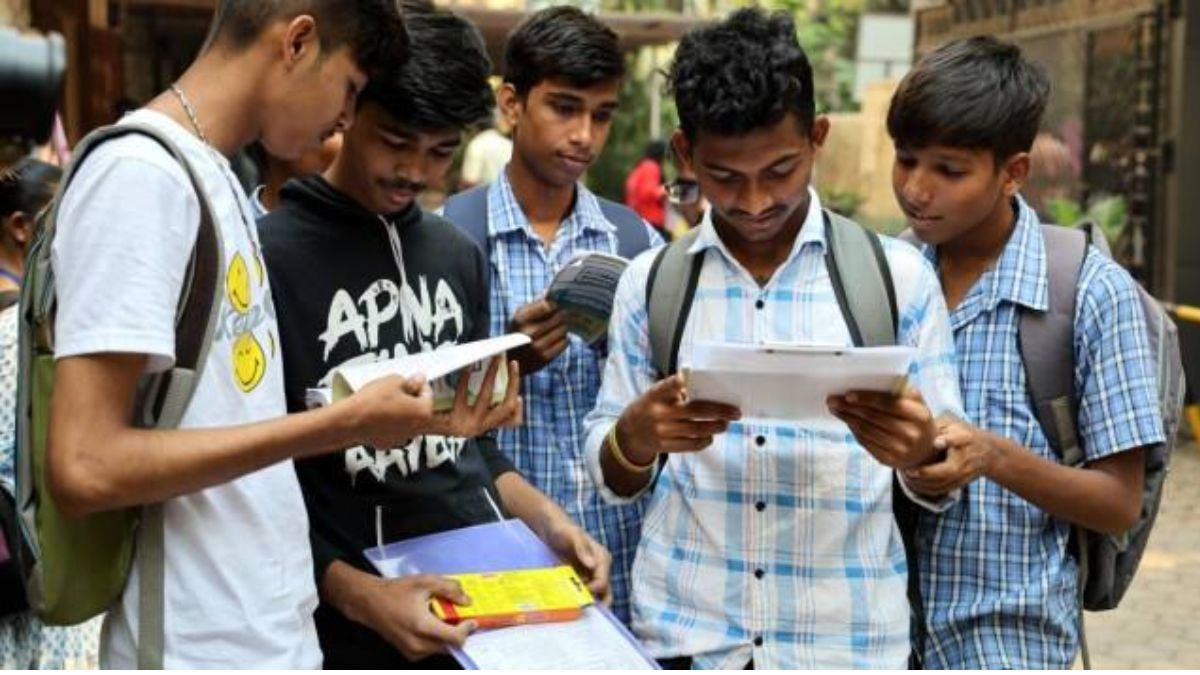
APPSC Syllabus 2024
APPSC Syllabus 2024: Andhra Pradesh Public Service Commission releases the syllabus for APPSC exam on its official website. As per the latest schedule, APPSC is all set to conduct the Group 1 Prelims exam on March 17, 2024. The exam conducting body has already released the syllabus for the APPSC Prelims and Mains on the official website of psc.ap.gov.in.
Candidates must know that APPSC conducts several recruitment exams including the Group 1 and Group 2 services exam. APPSC syllabus is an important aspect for candidates to consider while preparing for the examination. In order to get desired APPSC Result, candidates are required to go through the syllabus thoroughly.
The syllabus for APPSC prelims examination consists of two papers. While paper 1 is for General Studies, paper two is for General Aptitude. The APPSC Mains exam syllabus consists of two qualifying papers and five merit-ranking papers. For the unversed, the APPSC conducts the civil service exam in three stages - Prelims, Mains and Interview. Candidates who will clear the exam will be recruited as civil servants in the state administration of Andhra Pradesh.
APPSC Syllabus 2024: Group 1
Candidates can check the APPSC group 1 syllabus PDF in the link provided below:
APPSC Group 1 Syllabus PDF - Download
The Andhra Pradesh Public Service Commission prescribed the APPSC Mains Group 1 syllabus. The syllabus has been released on the official website in PDF format. There are various positions which will be filled through the Group 1 Mains exam. APPSC is a state-level exam which is conducted once a year. The APPSC exam is conducted in offline mode and the language of the exam is both English and Telugu. The exam is conducted in several centres across the state only.
The Mains aim behind conducting the exam is to give executive and non-executive posts to candidates who have been shortlisted in the exam.
APPSC Group 1 Syllabus: Prelims
Candidates preparing for APPSC Group 1 prelims examination are required to check out the syllabus for the same. The section below contains the detailed syllabus for APPSC prelims paper 1 and paper 2.
Paper 1: General Studies
The general studies paper in APPSC group 1 prelims exam contains the following topics:
Culture and History
- The Sungas. The Gupta Empire - their Administration - Literature, Science, and Technology, Social, Economic conditions as well as Religious - Art
- Indus Valley Civilisation: Society, Cultural History, Features, Sites, Religion, and Art. Vedic Age: Mahajanapadas. Religions: The Maghadas. Jainism and Buddhism. Foreign invasions on India and their impact. The Mauryans. The Satavahanas. The Kushans.
- Governor Generals and Viceroys. The battle for dominance among the European trading enterprises in India, specifically in relation to Bombay, Mysore, Bengal, Nizam, Andra, Madras
- The Kanauj and their Contributions. South Indian Dynasties include the Badami Chalukyas, the Rashtrakutas, Chalukyas, the Cholas, the Hoysalas, Reddis, and the Yadavas, the Kakatiyas.
- The Bhakti Movement and Sufism - Their Administration, The Delhi Sultanate. The Vijaynagar Empire and the Mughal Empire. Society, Literature, Religion, Economy, Arts, and Architecture.
- The nineteenth-century social and religious reform movements in India and the Concerned State. India's Freedom Movement. Indian War of Independence of 1857 - The origin, causes, nature, consequences, and significance with particular reference to the concerned State. India's Freedom Movement. Revolutionaries in India and Abroad.
- Mahatma Gandhi, his thoughts, Principles, and his Philosophy. Important Satyagrahas. Dr. B.R. Ambedkar, both his role in the creation of the Indian Constitution and his life. Important Satyagrahas. The Role of Sardar Patel. India after Independence - Reorganisation of the States of India. The Role of Sardar Patel.Constitution, Polity, Social Justice And International Relations
- The Constitutional Authorities: Functions, Powers and Responsibilities - Panchayati Raj - Public Policy and Governance.
- The Indian Constitution: Fundamental Rights, Fundamental Duties, Directive Principles of State Policy, Its Evolution, features, Preamble, Significant Provisions, Amendments, and Basic Structure
- The Union's and the States' roles and responsibilities. The Parliament and State Legislatures: Power, Privileges, Structure, Function.
- Rights Issues (Human rights, SC/ST rights, Women rights, and Child rights).
- The Impact of Privatisation Liberalisation and Globalisation on the Governance - Statutory, Regulatory and the quasi-judicial bodies.
Indian and Andhra Pradesh Economy and Planning
- Mains topics of the Indian Economy as a developing economy. The NITI Ayog and its approach to economic development. Environmental degradation and challenges. Economic development Human Development Index. Sustainable Development. Environmental Policies. India's rank in the world. Environmental degradation and challenges.
- Occupational Structure and Unemployment. The National Income, its concepts, and components – India's National Accounts. Demographic issues. Poverty and Inequalities. Various Schemes of employment and poverty eradication.
- Agrarian Crisis and land reforms. Agricultural credit. Minimum Support Prices. Indian Agriculture. Irrigation and water. Inputs of agriculture. Indian Agriculture. Irrigation and water. Inputs of agriculture. Liberalization, Privatisation, and Globalization. International Trade and Balance of Payments. Agricultural Strategy and Agricultural Policy.
- The GST and its Impact on Commerce and Industries. Centre, States financial relations- Financial Commissions. Sharing of resources and devolution. Financial Institutions. RBI and Monetary Policy. Banking and Financial Sector Reforms. Public Debt and Expenditure - Fiscal Policy and Budget. Commercial Banks and NPAs. Financial Markets. Instabilities - Stock Exchanges and SEBI.
- AP Reorganisation Act, 2014. Economic Issues arising out of Bifurcation. Special Status and Special Assistance. Controversy - Government's stand and measure. Assistance from the central government in creating a new city, recompense for income losses, and the advancement of underdeveloped areas.
Constitution Polity, Social Justice, and International Relations
- Indian Constitution: Evolution, Features, Fundamental Right, Preamble, Amendments, Structure, Directive Principles of State Policy
- Functions of the Union and the States, Parliament, State Legislature, Issues and Challenges pertaining to Federal Structure
- Constitutional authorities, Panchayati Raj, Public Policy and Governance
- Impact of Liberalization, Privatization, and Globalization (LPG)
- Human rights: Women's rights, Child rights, SC/ST rights
- India's foreign policy, international relations, Important policies and programmes of central and state government
Geography
- General Geography: Earth in the Solar System. The motion of the Earth. Concept of time. Elements and factors of Climate. Air Masses and Fronts. Atmospheric disturbances. Climate change. Internal Structure of the Earth. Major landforms and their features. Atmosphere - structure and composition. Oceans: Physical, chemical, and biological characteristics. Hydrological Disasters, Marine, and Continental Resources.
- Social: World, India, and concerned State: Sex-ratio. Literacy. Occupational Structure. Distribution. Density. Growth. SC and ST Population. Rural-Urban components. Urbanization, migration, and metropolitan regions. Racial, tribal, religious, and linguistic groups.
- Physical: The World, India, and the concerned State: Monsoon. Natural Vegetation. The Major physical divisions, Earthquakes, landslides, Natural drainage, climatic changes, and regions. Parks and Sanctuaries. Major Soil types. Rocks and Minerals.
- Economic: Basic Industries - Agro, fuel, and manpower-based Industries, mineral, forest, World, India, and the concerned state. Transport and Trade. Pattern and Issues. The major sectors of Economy, Agriculture, Industry, and Services and their salient features.
Recent Events Of National, Regional and International Key Points
Candidates should be aware of recent events and current issues. Follow the news frequently, and read magazines, newspapers, etc. to stay current.
Science and Technology
Energy Requirements and Efficiency: India's present energy requirements and deficits, as well as its current dependency on its resources and its energy policy, are all covered. nuclear, wind, and solar power.
Information and Communication Technology (ICT):
ICT and Governance - The various government schemes that promote the use of ICT, The various government schemes that promote the use of ICT
Science and Technology:
The National Policies on Science, Technology, and Innovation; The Nature and Scope of Science and Technology; Relevance of Science and Technology to day-to-day life; Institutes and Organisations in India that promote the integration of
Paper-II: General Aptitude
- Introduction to algebra — BODMAS, and simplification of the weird symbols.
- Data interpretation, Data Analysis, Data sufficiency, and the concepts of Probability.
- Understanding and analysing feelings, emotional intelligence dimensions, dealing with emotions, sensitivity, and stress management are all examples of emotional intelligence.
- Logical Reasoning and Analytical Ability.
- Number Series, Coding, and Decoding.
- The Problems Related to Relations.
- The Shapes and their Sub-sections, Venn Diagram.
- The Problems Based on Clocks, Calendar, and Age.
- The Number system and order of magnitude.
- Ratio, proportion, and variation.
- The Central Tendencies - mean, median, mode — including weighted mean.
- The Square, Square Root, Cube Root, HCF, and LCM, as well as the Power and Exponent.
- Profit and loss, simple and compound interest, and percentages.
- Time and Distance, Time and Work, Speed, and Distance.
- The Area and Perimeter of some simple Geometrical Shapes, Volumes, and Surfaces.
- The surface area of a cube, a sphere, a cone, a cylinder, and a cuboid.
- Familiar geometrical shapes such as triangles, quadrilaterals, rectangles, parallelograms, and rhombuses as well as lines, angles, and their properties.
APPSC Mains Group 1 Syllabus
The APPSC Mains Group 1 syllabus is provided below. Further, candidates should know that the Mains exam comprises two qualifying papers as well as five merit-ranking papers.
Qualifying Papers Syllabus
English (SSC Standard)
- Formal Speech
- Precis Writing
- Reading Comprehension
- English Grammar
- Translation
- Essay
- Letter Writing
- Press Release
- Report Writing
- Writing on Visual Information
Telugu (SSC Standard)
- Report Writing
- Dialogue Skills
- Translation
- Telugu Grammar
- Essay
- Elaborate thought of Verse/Poetic
- Precis Writing
- Comprehension
- Letter Writing
- Debate Writing
- Application Writing
- Formal Speech
- Statement Preparation
Merit Ranking Papers Syllabus
Paper 1 – General Essay (Degree Standard)
- A total of three essays of about 800 words
Paper 2 – History, Culture and Geography of India and Andhra Pradesh (Degree Standard)
- Geography: India
- Geography: Andhra Pradesh
- History and Culture of India
- History and Culture of Andhra Pradesh
Paper 3 – Polity, Constitution, Governance, Law and Ethics (Degree Standard)
- Public Administration and Governance
- Ethics in Public Service and Knowledge of Law (Civil, Criminal, Labour, Cyber, Tax Laws)
- Indian Polity and Constitution
Paper 4 – Economy and Development of India and Andhra Pradesh (Degree Standard)
- Industrial Policy of the AP Government
- Infrastructure in India
- Infrastructure Development in Andhra Pradesh
- Major Challenges to the Indian Economy
- Resource Mobilization in the Indian Economy
- Resource Mobilization in Andhra Pradesh
- Agricultural Development
- Agriculture Development in Andhra Pradesh
- Industrial Development and Policy
- Government Budgeting
- Government Budgeting in Andhra Pradesh
- Inclusive Growth
Paper 5 – Science and Technology (Degree Standard)
- Current Affairs
- Environment
- ICT
- Development v/s Nature
- Space, energy etc.
APPSC Prelims Group 1 Exam Pattern
The APPSC exam pattern for APPSC Prelims group 1 plays an essential role for those candidates who are preparing for the exam. The recruitment exam is further bifurcated into two papers, wherein each paper consists of 120 questions. The question in the exam will be MCQ type and each question carries one mark. Candidates will be given 2 hours to complete the paper. The exam consists of negative marks and one-third of the marks have been made.
APPSC Prelims Group 1 Exam Pattern |
||
|
Paper |
Part |
Number of questions |
|
Paper 1 |
History and Culture |
30 |
|
Indian Constitution and Polity |
30 |
|
|
India and Andhra Pradesh economy and planning |
30 |
|
|
Geography |
30 |
|
|
Paper 2 |
Mental ability |
60 |
|
Science and technology |
30 |
|
|
Current events |
30 |
|
APPSC Prelims Group 1 Marking Scheme |
||
|
Paper |
Part |
Marks |
|
Paper 1 |
History and Culture |
30 |
|
Indian Constitution and Polity |
30 |
|
|
India and Andhra Pradesh economy and planning |
30 |
|
|
Geography |
30 |
|
|
Paper 2 |
Mental ability |
60 |
|
Science and technology |
30 |
|
|
Current events |
30 |
|
APPSC Mains Group 1 Exam Pattern
Candidates should know that the APPSC Mains Group 1 has seven papers. Further, the first two papers of the exam are qualifying in nature. The Mains exam does not consist of negative markings. Further, candidates will be given a total of 3 hours to attempt every question.
APPSC Mains Group 1 Exam Pattern |
|
|
Paper |
Number of Marks |
|
Paper in Telugu |
150 |
|
Paper in English |
150 |
|
General Essay |
150 |
|
History, Culture, and Geography |
150 |
|
Polity, Constitution, law, and governance |
150 |
|
Economy and development |
150 |
|
Science and technology |
150 |
APPSC Mains Group 1 Marking Scheme |
|
|
Paper |
Time (in minutes) |
|
Paper in Telugu |
180 |
|
Paper in English |
180 |
|
General Essay |
180 |
|
History, Culture, and Geography |
180 |
|
Polity, Constitution, law, and governance |
180 |
|
Economy and development |
180 |
|
Science and technology |
180 |
Frequently Asked Questions (FAQs)
How can candidates download the APPSC Prelims and Main Group 1 syllabus?
In order to download the APPSC Prelims and Main Group 1 syllabus, candidates need to visit the official website of the APPSC. Under the syllabus section, candidates can look for the latest syllabus.
How many sections does the APPSC Main Group 1 syllabus consist of ?
The APPSC Main Group 1 syllabus consists of two qualifying papers as well as five merit-ranking papers. Candidates can take a look at the syllabus above.
How much time does the candidate have to complete the APPSC Main exam ?
The candidate has a total of three hours to complete the APPSC Main exam. The paper does not have any negative markings.
Why is the APPSC syllabus necessary for candidates ?
In order to score well in the exam, candidates should be well-versed with the APPSC syllabus and all topics it covers.
How many questions does the APPSC Prelim Paper 1 exam consist of?
The APPSC Prelim paper 1 exam consists of 30 questions in total and 30 marks are given to those questions. Which means each correct answer is of 1 mark.
When will APPSC Group 1 exam take place?
The upcoming APPSC group 1 exam is scheduled to take place on March 17, 2024.
How many papers are there in APPSC group 1 prelims exam?
The APPSC Group 1 prelims exam conists of two papers. Paper 1 consists of subjects including History and Culture, Indian Constitution and Polity, India and Andhra Pradesh economy and planning, and Geography. Meanwhile, paper 2 consists of Mental ability topics, Science and technology, and Current events.


APPSC 2024: Steps to download departmental test results at psc.ap.gov.in

AP inter syllabus revision, removal of 1st year board exams: BIEAP’s proposed exam reforms

AP SSC Class 10th Exams 2025 tentative dates out, check here

IIT Madras and AP govt collaborate to enable deep-tech innovation, scale up digital skilling

AP TET Results 2024 Updates: Result declared at aptet.apcfss.in; 50.79% students pass

AP TET Result 2024: How to check scorecards at aptet.apcfss.in


Loading...